

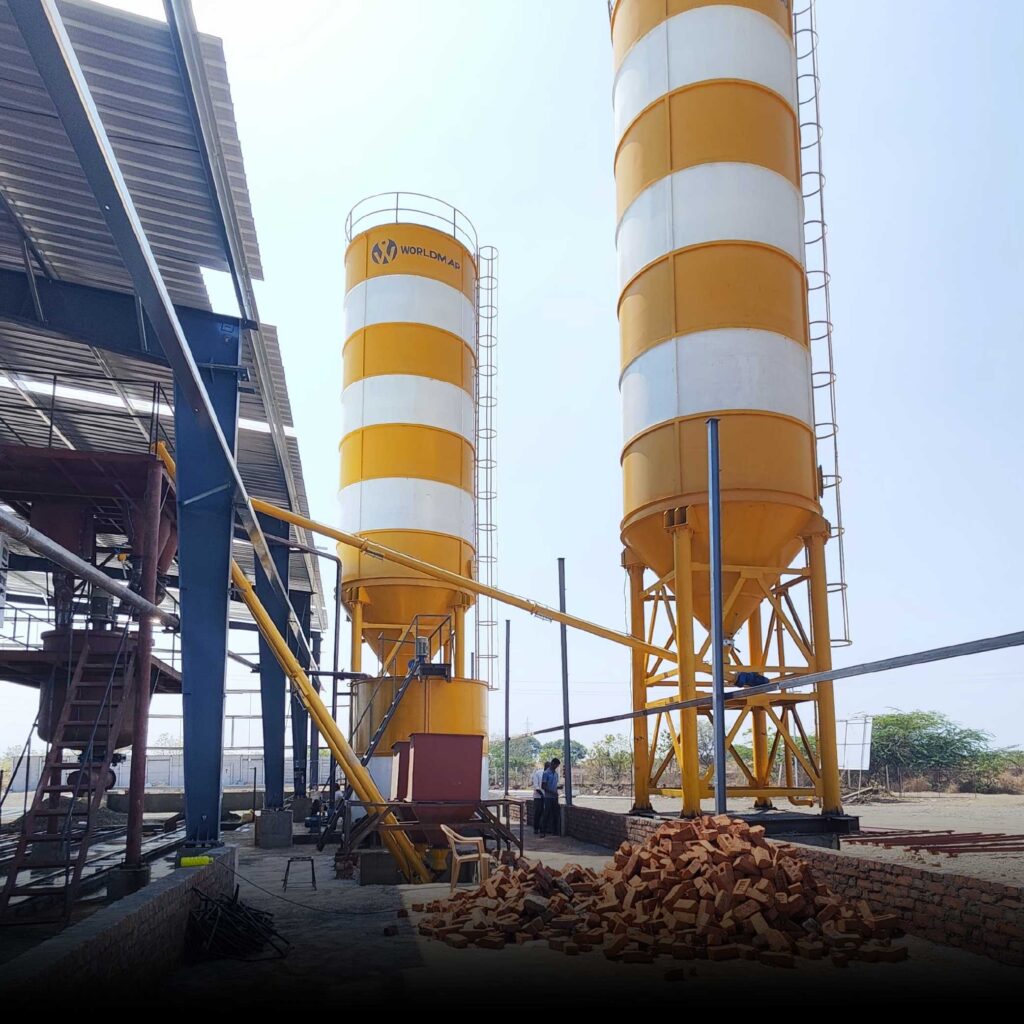
Producing AAC blocks involves a combination of chemistry, precision batching, and controlled curing. Here’s a step-by-step look:
- Raw Material Preparation
Key ingredients include fly ash (or fine sand), cement, lime, gypsum, aluminium powder, and water. Each is carefully weighed to maintain consistent quality. - Mixing & Slurry Formation
The materials are blended in high-speed mixers to create a uniform slurry. Aluminium powder reacts with lime and cement, releasing hydrogen gas, which forms the characteristic air bubbles. - Pouring & Pre-Curing
The slurry is poured into large moulds. As it expands, it forms a lightweight “cake.” This cake is left for a few hours to set enough for cutting. - Cutting into Blocks
Using precision wire cutting machines, the cake is sliced into standard-sized blocks. Accurate cutting reduces wastage and ensures smooth surfaces for easy plastering. - Autoclaving (High-Pressure Steam Curing)
The blocks are transferred into an autoclave — a sealed chamber where they’re exposed to steam under high pressure and temperature. This curing step gives AAC its strength, durability, and stability. - Quality Check & Packing
Once cooled, the blocks are inspected for density, dimensions, and compressive strength before being palletised and dispatched.